

Assistant Professor in Political Science and Honors professor
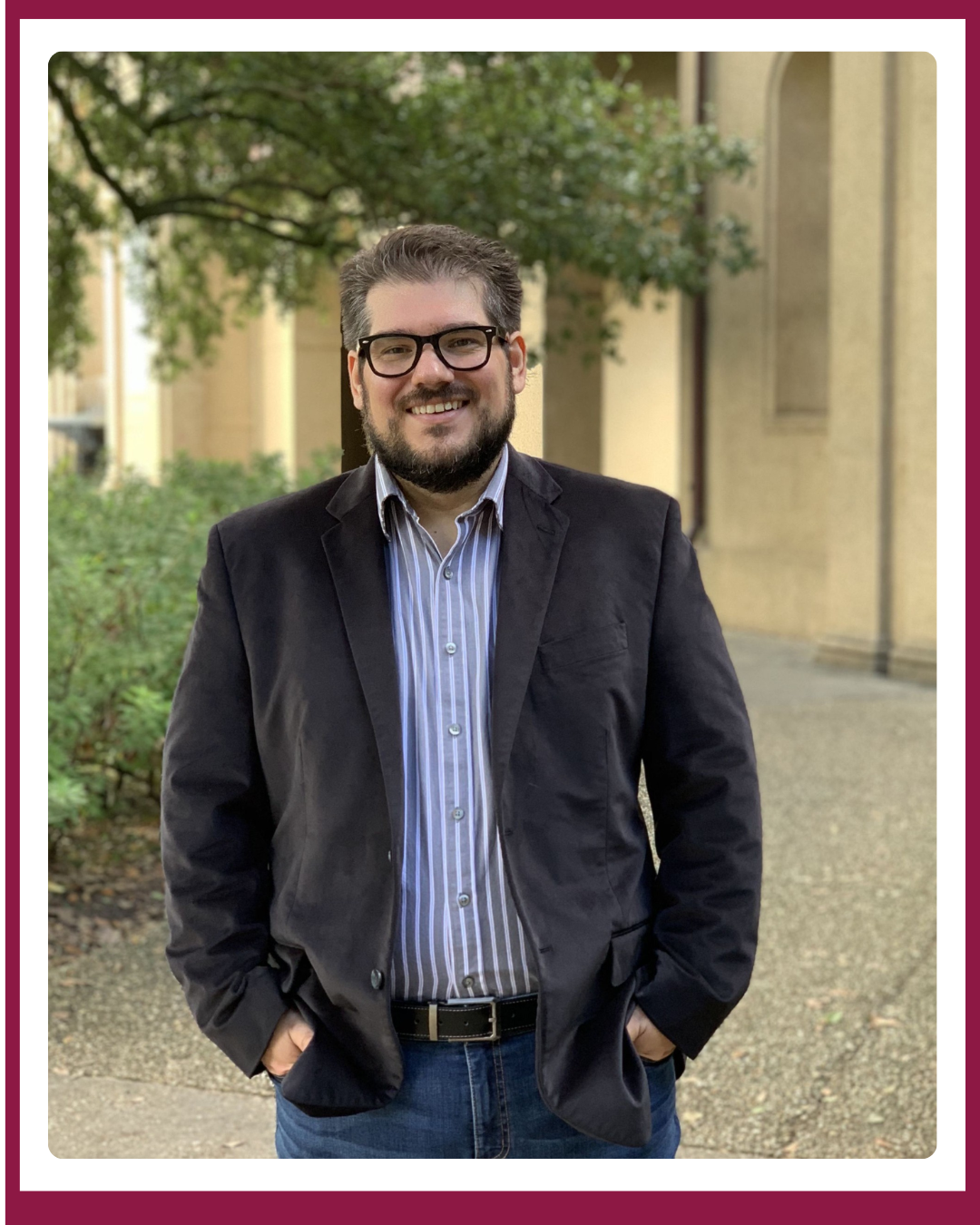
Dr. Cory Sukala Meet Dr. Sukala! Assistant Professor in Political Science and Honors professor. He is a political theorist exploring the crossroads of religion, politics, and global thought. He studies how different political traditions coexist—or clash—especially as Buddhist ideas meet Western perspectives in our globalized world. From elections administration in Pennsylvania to cutting-edge research in Buddhist and American political thought, he brings real-world experience and big ideas to our Honors classes!
Teaches:
Honors 390V Worlds of Buddhism
I teach in the Department of Political Science, Public Law and Administration, but my classes probably don’t focus on politics the way that you normally think of it. I am a political theorist and my main focus is on the relationship between religion and politics, so we spend our time in class talking about what it is that we as a society think that we should value and how we should go about trying to judge between all of the various forces in our lives telling us where we should turn to get the answers to that question.
I am from a very rural area and was a first-generation college student. Teaching at NMSU and having the chance to work with so many students that are coming from the same place that I was when I entered college feels like an opportunity to repay all of the people who helped me by trying to grow the next generation of people who can help others later.
Learning isn’t a process that happens in a straight-line or in one direction, with a teacher telling you what they know and a student doing their best to listen and remember it. You aren’t always just transferring knowledge, sometimes you’re all trying to discover it together and this is particularly true for a course like Worlds of Buddhism. An important part of the Buddhist tradition centers around the interaction between students and teachers and how that relationship can be a vehicle to uncover and express ideas that would otherwise be hidden to us.
To try and capture that spirit for the Worlds of Buddhism class, I allowed students to forgo a normal midterm exam and instead come and talk to me for an hour or so about the ideas that we’d been exploring so far in the semester. It wasn’t an interrogation, just a conversation about how the ideas of Buddhist thought and practice resonated with them and what connections they drew between the material and their own understanding of reality.
It couldn’t have gone better. Not only were the students and I able to clearly see where their strengths and weakness were in understanding Buddhism (which is ultimately what you want an exam to be able to capture), because it was a conversation we were also able to explore parts of those ideas in ways we hadn’t discussed in class. While learning to express yourself through writing is extremely important, it has the drawback of being very one sided. Someone writes something and someone else reads it and any dialogue about the ideas can only happen between the lines. In having an exam that not only takes place off of the page but also is a discussion rather than a traditional examination, it felt like the students and I could actually learn new things during a test rather than just quizzing them on what we’d already learned.
What would you tell students as to why they should think about taking an Honors class?
Honors classes are so fun and challenging not only because they allow you to explore ideas that are outside of your comfort zone, but also because everyone in the room is having that same experience. Honors classes are full of students from across the university, who are all coming together to explore subjects outside of their major. Coming into the semester, I asked students to estimate how much they knew about Buddhism and the most frequent answer was 2 out of 10. Normally, if you’re coming into a class outside of your major and you know almost nothing about the subject, you might be right to feel a little nervous since you could expect everyone else to have more experience than you. But in an Honors class, with students from different majors across the university all coming together, everyone is starting in the same place. No one on campus is majoring in Buddhism, so instead of stressing out and worrying that you’re behind the rest of the class, everyone can relax, regardless of how much they know, and just come on the adventure to figure it all out together.